Tech from someone who lives inside it all day. Equal parts wonder and side-eye.
Untangling myself from the subscription trap
On wrestling with my digital subscriptions and regaining control
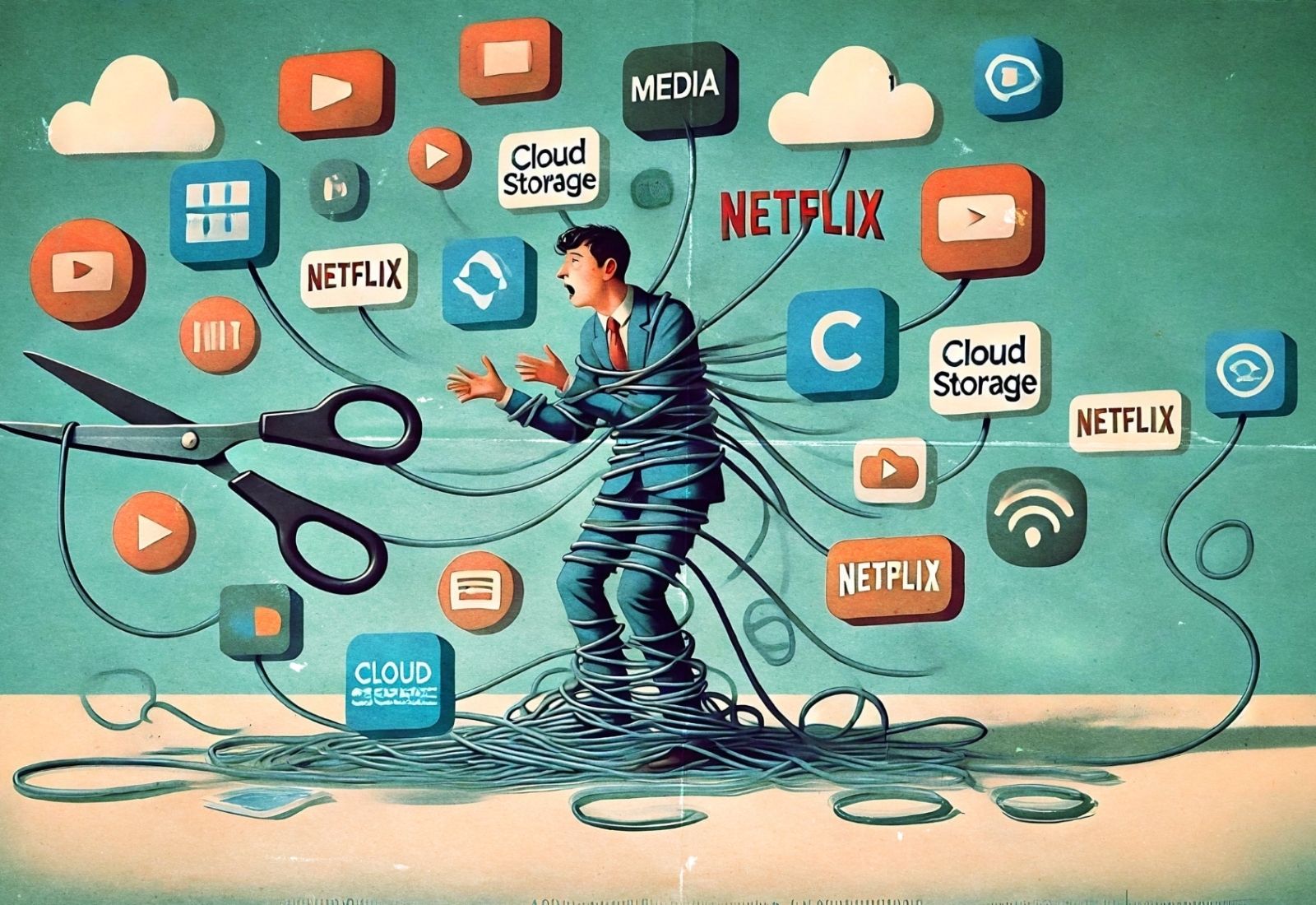
I recently found myself in the middle of an unexpected but inevitable budget review. It all started with the need to migrate my personal finance tracking to a new app, and as I went through my expenses, it became impossible to ignore the growing list of digital subscriptions.
Over the past month, I’d been seeing headlines about rising subscription costs. First, Canva, the design tool that’s pretty crucial to my freelance side gig, announced a whopping 300% price hike on their yearly Teams subscription.
Then came YouTube Premium followed with a more modest but still noticeable price bump. And, of course, Apple wasn’t far behind, raising the cost of iCloud+ storage plans. With how the economy is going, this budget review wasn’t just me being proactive; it was me trying to brace for impact.
As I tallied everything—the usuals like Netflix, Disney+, Spotify, Apple Music, Lightroom, iCloud storage, stuff like digital magazine and comics subscriptions, food delivery app subscriptions, and a whole other lot—I couldn’t help but feel a sense of growing unease at the amount of it versus how much value I get out of them.
Subscriptions have now become one of my biggest recurring expenses. In the past, back when I lived in the city, these costs were easy to keep in check—there were more pressing expenses like rent, gas, and daily commutes. But now, with a remote lifestyle and fewer day-to-day expenses, it’s become easier to rationalise spending on apps and digital services.
Truthfully, it’s hard to deny the appeal of subscription services. In theory, they’re designed to make life easier: smaller, recurring payments seem like a more manageable option compared to hefty, one-time fees. Why pay PHP 2,000 upfront when you can pay PHP 199 a month? The logic feels sound, especially at a time when flexibility is key, and people want the option to cancel whenever they need to.
Psychologically, this model taps into a few key biases. There’s loss aversion, where we prefer to avoid a big upfront cost, and present bias, where we favour short-term gains over long-term savings. The bite-sized monthly fees feel much lighter on the wallet, even though they often end up costing more in the long run. It’s how they get you hooked—the price feels small enough that you don’t think twice, but over time, it quietly stacks up.
While subscription models make it easy to rationalise monthly fees, the idea of a one-time payment often feels like a punch to the gut. Even when it’s the cheaper option in the long run, seeing a price tag of PHP 2,000 upfront feels much harder to swallow compared to PHP 199 per month. It’s the kind of sticker shock that makes you hesitate, even though the math works in favour of the lump sum.
It’s funny how the human mind works. We’re wired to avoid large, immediate expenses, even when they’re ultimately more economical. In my case, I’ve often opted for the monthly plans even though, looking back, I could’ve saved quite a bit by paying for a year upfront. But the upfront investment feels like a commitment—something we’re not always willing to make, especially when flexibility and that small monthly amount feel so much more appealing.
When it comes to cancelling subscriptions, I’ve learned to be pretty mindful. After getting burned once or twice by free trials that turned into hefty annual fees, I’ve become diligent about cancelling services I no longer need—especially on the App Store, where managing subscriptions is straightforward. If you’re subscribing to a free trial, immediately go and cancel it, you’ll still have access for the entirety of the trial period until you have firmly decided to purchase. (This applies to all apps except for Apple’s own services)
Many of these subscriptions genuinely make aspects of my life easier—whether it’s the focus-boosting soundscapes from ++Endel++, the convenience of managing my life and ideas with ++Mindkit++, or iCloud’s seamless integration across my devices.
Take Endel, for example—a beautifully designed app that I genuinely love to use every day to improve focus and relaxation. I look at its pricing options: PHP 6,990 for a lifetime license, or PHP 1,990 for an annual subscription. But monthly, it costs me only PHP 75. Every now and then an offer for a lifetime subscription would pop up on the app and I would go through the same sing and dance routine of balking at that one-time price tag, then doing the mat and computing how long it would take my meagre 75 a-month payments until it surpasses the one-time price of owning it forever (it will take me about 93 months, or almost 7 years), and then at the end still close that pop-up window failing to justify such a purchase.
On the other hand, there’s MindKit, a life-management app by an indie developer that I just love and have been using as a second brain and life dashboard for almost two years now. This simple but powerful app eliminated my need for multiple apps to manage stuff like habit tracking, tasks, ideas, reminders, and notes. At first, I subscribed to their monthly plan at PHP 45, but after realising the value I was getting, I switched to their annual plan for PHP 359, which felt much more reasonable. And when my current plan runs out, I’m planning to go for the lifetime option at PHP 999—a one-time payment that’s still much more manageable than most lifetime purchases I’ve come across. It’s one of those ideal times where the pricing feels fair for the value it offers.
It also doesn’t help when you come across apps that seem simple but have surprisingly hefty price tags. Recently, I just needed an app to convert short videos to Live Photos. You’d think that’d be a straightforward, one-time-use tool, right? But no. The app I found offered a one-time purchase option that was way pricier than expected, and the alternative was a subscription plan that made even less sense. Seriously, PHP 1,790 for an annual subscription to convert videos to Live Photos? And the weekly plan felt like a joke. It reminded me of how apps on the App Store used to be simpler—maybe a one-time payment that felt reasonable. But now, every service is trying to rope you into subscriptions, with a million options for monthly, yearly, or even weekly payments, while that lifetime option is priced through the roof.
Ownership vs. Access
This whole process of evaluating subscriptions makes you realise just how much has changed in the way we use digital products. In the past, we’d buy software or media outright, and that would be the end of it—no ongoing costs, no monthly decisions. But today, everything seems to come with a subscription model, and this isn’t just about convenience; it seems to be part of a larger shift from ownership to access.
We no longer buy things outright; instead, we pay for continuous access. Whether it’s music, movies, apps, or even cloud storage, we’ve become accustomed to paying for the right to use them without actually owning anything. And this change in how we engage with digital services has made it harder to let go of subscriptions, because the minute we cancel, we lose everything—our playlists, our video libraries, our files in the cloud.
I realize this shift isn’t just about how we spend money; it’s about how we’ve grown used to the convenience of having everything at our fingertips. The sense of endless access keeps us paying, even when we might not use these services as often as we think.
We no longer buy things outright; instead, we pay for continuous access. Whether it’s music, movies, apps, or even cloud storage, we’ve become accustomed to paying for the right to use them without actually owning anything.
And it’s crazy how far the subscription model has gone. I recently read about BMW trying to charge people for heated seats on a subscription basis. Imagine that—paying money every month just to warm your car seat, even though the hardware is already built in! The backlash was so bad they eventually had to ++pull the plug++ on it. And it’s not just cars—there are talks of more companies experimenting with subscriptions for things that used to be standard. At this rate, I wouldn’t be surprised if we start paying subscriptions for the privilege of using our own furniture.
Ultimately I had to ask myself where to draw the line. It might mean cutting back on less essential services. For others, it could mean finding ways to optimize subscriptions, like switching to lifetime plans or annual payments that make more sense in the long run. Or maybe do the start-and-stop method - subscribe for a limited time and then cancel after you’ve maximized its use.
Honestly, it’s been a real eye-opener going through all my subscriptions. I’ve built a life around convenience and unfettered access to endless entertainment options, apps, and services that have quietly slipped into my routine, making everything easier, more connected, more seamless.
But with prices creeping up and new expenses constantly popping up, I’m realizing I can’t keep everything. Something has to give.
For me, maybe this isn’t just about saving money—it’s about being more intentional.
If we’re to believe the eternal words of now-retired tidying-up queen Marie Kondo, one should only keep the things that still spark joy. And not financial stress. ◼️