Life happening to me, and me overthinking it.
The man who brought magazines and expectations
On memory, things we hold onto without realizing, and quiet farewells
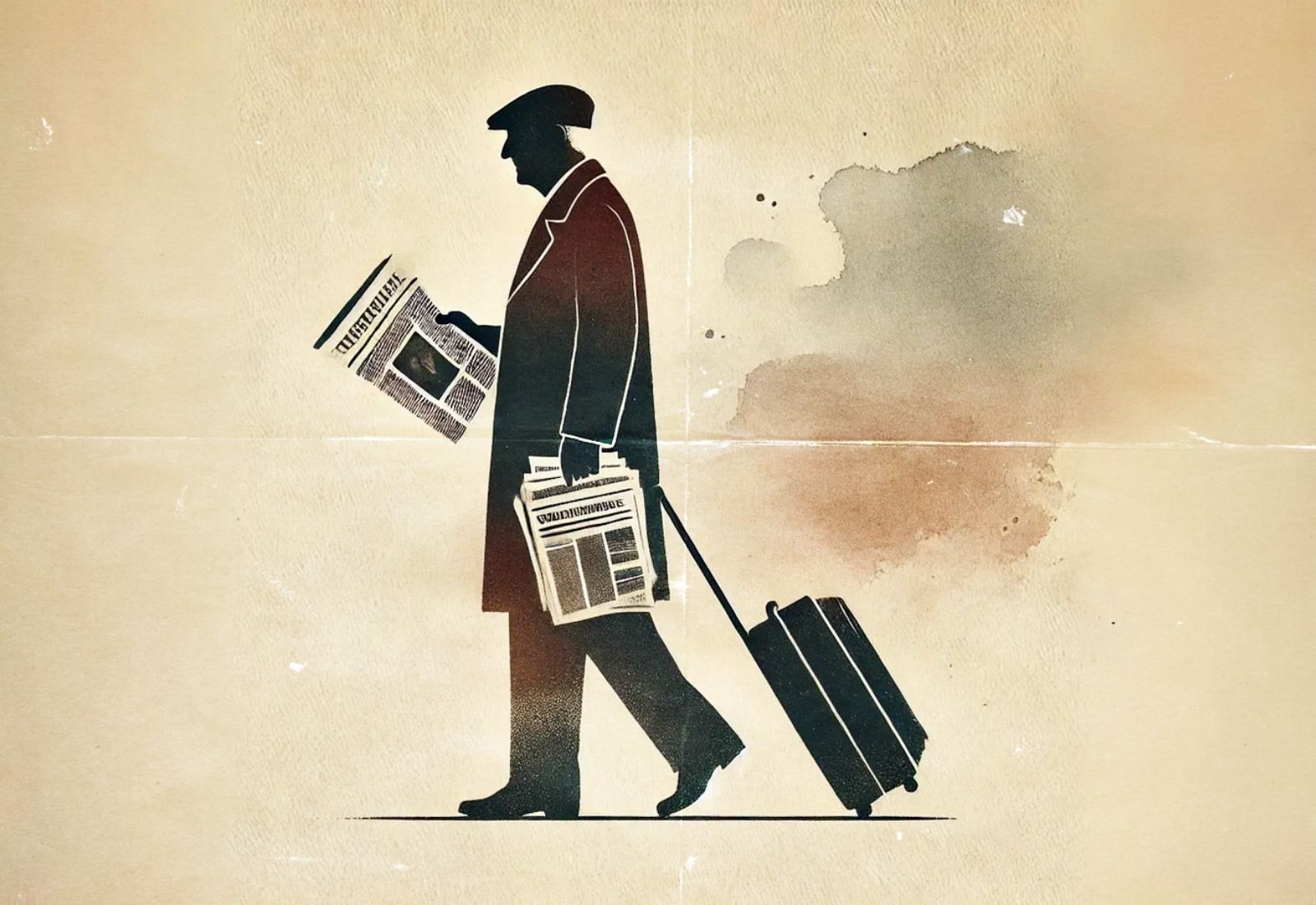
My grandfather, the man who brought magazines and expectations, passed away on his birthday.
He was my maternal grandmother’s only brother. But for as long as I can remember, he was the oldest living grandfather figure I had, after both my parents’ fathers passed pretty early on. Today, he was laid to rest.
He was supposed to celebrate his 93rd, with a big party planned for him here. But a month prior, he canceled his visit. He wouldn’t be making it after all.
Still, some of my cousins had already booked flights and were eager to visit; plans were in motion. We gathered anyway—on a smaller scale, but still together. There was cake, a cookout, even a trip to the beach. A rare get-together.
Then, in the middle of it, we got the news: he had passed. That very day.
There was a strange, almost poetic weight to it. One us even wondered out loud about what it means when someone dies on their birthday? My cousin’s husband asked if there was an old folk belief tied to it maybe, but none of us had an answer. All we knew was that we were already together, commemorating his life without realizing it. And perhaps, in some way, that was fitting.
He wasn’t the kind of grandfather you picture when you hear the word. He wasn’t a parent’s father, nor was he a constant presence in our lives. But he was someone my mother was close to—almost like a second father after their own had passed early. And to me, he was a quiet but fascinating figure.
A retired colonel of the Philippine Constabulary, he carried an air of discipline, sophistication, and worldliness. He was always well-dressed, traveling with a suitcase, a newspaper or a magazine in hand. He was the only ‘grandfather’ I had ever really known. And whenever he visited, he brought things from the city—small, random things, but to a kid like me, they felt exciting and new.
Once, he brought a packet of corn kernels—the kind you cook into popcorn. I had never seen one before, and I vividly remember being amazed the first time I watched them pop. Another time, it was powdered iced tea mix. I hadn’t even heard of iced tea back then, and I still remember that being the first time I was introduced to the drink.
And then there was the chocolate milk. A brand I had never seen before, haven’t seen since, and would forever associate with him. He drank it regularly, and I remember asking if I could taste it, but he shook his head and said, “No, this drink is for old people.” In retrospect, these were such ordinary things, nothing special. But childhood memory works in strange ways, and for some reason, these little things stuck with me.
But what stayed with me the most were the magazines. Time. Newsweek. A newspaper from yesterday, folded neatly. I don’t remember ever seeing him completely absorbed in them, but they were always there—fixtures of his presence, necessities he carried as if they were as essential as his suitcase. These weren’t comic books or glossy entertainment magazines; they were news magazines, serious and heavy with the world’s events.
For a child, they should have been boring. And maybe they were. But something about them piqued my interest—not because I wanted to read them, but because of what they meant. I had never met anyone like him before. Someone who traveled with a newspaper, who carried something ‘important’ with him wherever he went. It made an impression on me, even if I didn’t fully understand why.
I still vividly remember the Time magazine he had with the burning World Trade Center on the cover after 9/11. I was in second grade. I barely understood what had happened beyond what I saw on TV. But I brought that magazine to school, maybe to feel important, maybe to feel like I had a connection to something bigger. When my teacher brought up the topic, I pulled it out, eager to share, feeling like I was contributing something of value.
“I was just stepping out of the rigid structure I had built for myself. And for the first time, I was letting myself exist outside of expectations. And then here was my grandfather, telling me I wasn’t doing my life right.”
His visits weren’t frequent, maybe once every two or three years, but when he was around, he carried a certain weight. He wasn’t a fixture in my life, but he was someone who stood apart.
By the time I was in high school, his visits had dwindled, and when he did visit, I was often away missing him by a day or two. But one of the last times I saw him, he was adamant that I should apply to the Philippine Military Academy.
It wasn’t just a suggestion. It was a serious, tangible thing. He had brought a form, ready to be filled out.
It wasn’t the first time people had projected paths onto me—my father half-seriously bragged to his buddies that I had the makings of a lawyer, my paternal grandmother thought it’d be nice to have a priest in the family. But I was younger then, and the emotional weight of those expectations felt different at this stage in my life.
He saw me, a homebody who would spend hours in his room learning a song on the keyboard, who read books instead of going outside doing… I don’t know what, and thought: this kid needs structure. My thought at the time—and I could totally be projecting—was that he probably thought I needed to be made into his old-timey idea of what a man should be. The words said that stayed with me were, “it shouldn’t be like this” or “it’s not right.”
At that age, I was barely thinking about who I was supposed to be. I was just doing what I knew. Excelling academically had always been my thing, and entering a private Catholic high school, I threw myself into it. The pressure wasn’t necessarily external. Not one of my parents ever insisted on half of what I thought I should be, but I carried it anyway. If anything, I boxed myself in, convinced that being at the top of my class was the one thing I could control.
By sophomore year, that pressure had settled into a quiet kind of strain, one I barely acknowledged until it manifested physically. I developed an ulcer, most probably from anxiety I had to learned to bottle up. But somewhere along the way, I started loosening up and relaxed enough to make friends and socialize and look at the world without thinking it’s out to get me. Some of my classmates thought I was rebelling or slacking off when I found myself involved with my more trouble-making classmates. Not really. I was just stepping out of the rigid structure I had built for myself. And for the first time, I was letting myself exist outside of expectations.
And then here was my grandfather, telling me I wasn’t doing my life right.
I didn’t react much. I heard him out. I didn’t argue. I just let it pass, knowing deep down that this was never a path I would take. He was never forceful about it. Not with me, at least, but I know he hounded my mother about it for a while. Eventually, he let it go.
But something about that moment lingered. It wasn’t anger, exactly. Not resentment, either. More like a quiet, simmering hurt at being misunderstood, misjudged, at being told who I should be.
“I don’t feel guilt, or even regret. Just an awareness of how distance creeps in, how relationships shift in ways you barely notice until you look back.“
As the years passed, I saw him less and less. He had remarried, started a new family elsewhere, and visits home became infrequent. And life moves in the natural way that people get pulled in different directions.
The last time I saw him might have been that moment in high school when he tried to push me toward the military. Or maybe it was later, in a passing visit that I can’t even remember anymore.
I don’t feel guilt, or even regret. Just an awareness of how distance creeps in, how relationships shift in ways you barely notice until you look back. My sister saw him just last year. She, being in the police force, had a different connection with him than I ever did. And I suppose, had his birthday party gone as planned, I might have seen him again, too. Maybe for the last time. Maybe with enough time to close whatever small gap remained between us.
But life, as it does, had other plans.
Flash forward to last week and we had that party for him anyway, though he wasn’t there. We had cake. We celebrated in his honor. And then, in the middle of it all, we found out he had passed.
It felt… expected, almost. As if he knew he wouldn’t make it, as if he had stepped away quietly, letting the celebration go on without him.
I don’t know if there’s a meaning to any of it.
But I do know that when I think of him, I’ll think of those old TIME magazines. Of a grandfather who came home with a suitcase full of the city. Of a man who saw a future for me that I never wanted, but who still left a mark on me in ways he never knew.
I’ll think of the quiet weight he carried, the way he moved through the world with a certainty I never quite understood but always noticed. He belonged to a generation that believed in structure, discipline, and carving out a legacy through tradition. And maybe, in his own way, he was trying to pass that down to me, believing it was the right thing, the best thing.
I resisted that mold, but I still carry pieces of him with me. The way I instinctively reach for a magazine in an airport lounge or the TIME magazines I have collected. The way I’ve built my life not in the way he imagined for me, but in a way that still values knowledge, discipline, and a curiosity about the world. Just not through the rigid lens he once thought I needed.
And maybe I’ll think of that chocolate milk. The one I’ve never seen anywhere else, but that, in my mind, is forever tied to him.
Maybe legacy isn’t just about the big things like career paths, expectations, or traditions passed down. Maybe it’s also in the smallest of details. A suitcase. A newspaper. A drink. A presence that lingers, long after someone has left the room.
◾